What Are the Parts of a Roof Called? Essential Roof Parts Names for Homeowners
Understanding your home exterior is critical for proper property maintenance and protection. Every day, the elements batter the top of your house. When you face unexpected leaks, severe storm damage, or age related wear, knowing the correct vocabulary empowers you to make highly informed financial decisions.
This comprehensive guide breaks down the complex systems above your head into clear, easily understandable categories.
Roof anatomy overview
The anatomy of a roof consists of multiple interconnected systems working in unison to shed water. Every element plays a highly specific role in shedding rainwater, bearing heavy winter snow loads, and ventilating the enclosed attic space below.
When homeowners first ask what are the parts of a roof called, they usually think only of the visible asphalt shingles facing the street. The actual reality of the construction is far more intricate.
These systems include internal framing, solid decking, waterproof underlayment, exterior coverings, and finishing metal details. Learning specific names helps you identify the exact source of a structural problem. This knowledge accelerates repair timelines and prevents costly miscommunication with repair crews.
The core roof structure
The foundation of any exterior envelope lies in its wooden structural framing. This hidden internal framework dictates the shape, slope, and total strength of the entire building. It bears the heavy weight of the exterior materials, winter snow accumulations, and severe wind pressure. A compromised roof structure puts the entire building at massive risk of collapse. To properly understand this framework, you must know the following terms:
- Rafters: These are traditional framing members cut and installed individually by carpenters directly on the job site. They extend upward from the exterior walls to the central apex of the structure to support the weight above.
- Trusses: These are modern prefabricated engineered wooden units in specific shapes to maximize load bearing strength while minimizing lumber use. Cranes lift these massive units onto the building during the initial framing phase.
- Collar Ties: These horizontal wooden beams connect opposing rafters near the upper section of the attic. They perform a vital structural role by preventing the rafters from spreading apart and collapsing outward under heavy external loads.
- Ceiling Joists: These horizontal beams run across the bottom of the attic space. They tie the exterior walls together securely and provide a flat surface to attach the interior drywall ceiling of the living rooms below.
- Decking: Also known as sheathing, this is the flat solid surface attached directly to the rafters or trusses. It forms the foundation for all subsequent parts of a house roof. Builders typically use oriented strand board or exterior grade plywood. It must be thick enough to hold nails securely.
Exterior surfaces and geometries
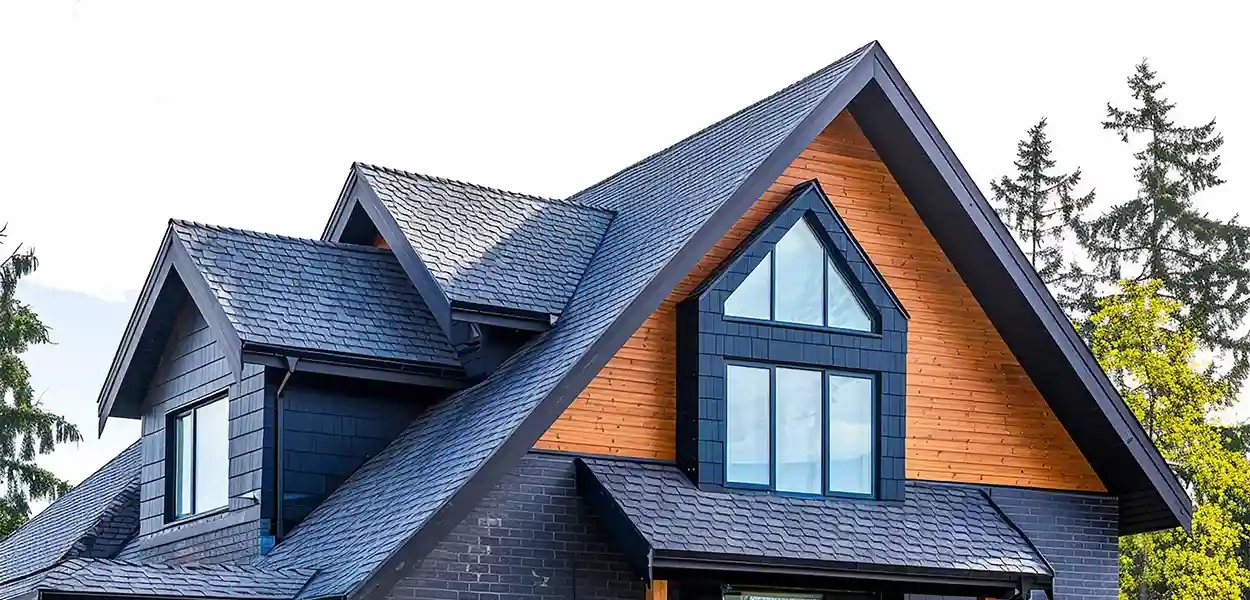
The visible shape of your building defines its architectural style and dictates exactly how it handles water runoff. Different slopes and sharp angles require specific waterproofing materials and precise installation techniques. Knowing these specific roof elements helps you accurately describe the architectural layout of your property.
- The ridge: This is the absolute highest horizontal line running across the entire building where two upward sloping planes finally meet.
- Eaves: These are the lower edges of the slope that overhang the exterior walls. They serve a protective function by directing cascading rainwater far away from the exterior siding and the concrete foundation.
- Soffit: This is the horizontal underside of the overhanging eaves. You can see this part when you stand directly against the exterior wall and look straight up.
- Fascia: This is the long vertical facing board attached directly to the lower ends of the wooden rafters. This specific board serves as the primary mounting point for your rain gutters.
- Rake: This is the sloping edge of a gable style structure at the end wall of the house. Unlike horizontal eaves, the rake runs on an incline from the lower edge all the way to the peak.
- Valley: This is the internal intersection where two sloping planes meet to form a downward angle. These channels collect and direct massive amounts of water during rainstorms, making them highly susceptible to dangerous leaks.
- Pitch: This term describes the exact steepness or angle of the slope. Contractors calculate this by measuring how many inches the surface rises vertically for every twelve inches it extends horizontally.
Layered system (roofing components)
Above the wooden decking lies a precise, sequentially installed sequence of materials engineered exclusively to keep moisture out. These roofing components work as a unified waterproof barrier. Missing a single step compromises the entire protective envelope. Here is the numbered sequence of how these layers are applied:
- Ice and Water Barrier: This self adhering waterproof membrane protects the absolute most vulnerable areas of the structure. Installers place it along the lower eaves, inside the valleys, and around vertical penetrations like chimneys. It seals tightly around metal fasteners to stop moisture infiltration.
- Underlayment: This wide water resistant barrier covers the entire wooden deck. Traditional construction uses asphalt saturated felt paper. Modern residential installations often use tightly woven polymers for superior tear resistance.
- Starter Strip: These specialized narrow shingles go on first, directly at the eaves and rake edges. They feature a concentrated strip of strong adhesive that seals the very first row of visible materials tightly down, preventing high winds from lifting the edges.
- Outer Covering: This is the primary visible layer that takes the direct brunt of the weather. Asphalt shingles remain the most common choice due to their affordability. Other materials include metal panels, baked clay tiles, or natural slate.
The proper integration of these parts of roofing requires exact overlapping techniques. Water must flow seamlessly from one upper section down to the next without ever encountering a gap.
Essential details: flashing, ventilation, and drainage
Large flat areas rarely suffer from spontaneous leaks. Water problems almost always begin at the edges, joints, and penetrations. Specialized metal materials and carefully designed airflow systems protect critical zones.
Flashing prevents water from entering the building at tight joints and awkward angles. Every piece of metal flashing serves a specific function:
- Step Flashing: Small metallic segments woven between individual shingles where the downward slope meets a vertical wall.
- Continuous Flashing: A long unbroken metal strip covering the joint where a downward sloping section meets a vertical wall positioned directly below it.
- Valley Flashing: A wide V shaped metal channel installed to protect the internal angles where two separate planes intersect.
- Plumbing Boots: Specialized rubber and metal cones designed to stretch over circular PVC plumbing pipes that exit through the decking.
Ventilation is an invisible but absolutely vital component of modern roof parts. Proper continuous airflow prevents extreme heat buildup during the summer and stops condensation accumulation during the winter.
- Intake Vents: Located under the overhanging eaves in the soffit panels, these grated openings allow cool fresh air to enter the dark attic space constantly.
- Exhaust Vents: Installed continuously along the highest horizontal apex of the structure, these specialized channels allow trapped hot air to escape naturally.
- Gable Vents: Installed vertically on the exterior siding near the apex, these louvered openings allow beneficial cross ventilation across the attic space.
Drainage systems manage the heavy water volume once it leaves the shingle surface:
- Drip Edge: An L shaped metal flashing installed at the lowest edges to force water to drip away from the wooden fascia board.
- Gutters: Long horizontal metal troughs that collect the rapid runoff.
- Downspouts: Vertical metal tubes that carry the collected water safely down to the ground and away from the building foundation.
Frequently Asked Questions
What is the exact difference between a soffit and a fascia in standard terminology?
These adjacent boards at the roof’s edge serve different functions. The horizontal soffit faces downward and holds intake vents. The vertical fascia faces outward to support gutters.
Why are there so many specific terms just for flashing?
Metal flashing directs water away from vulnerable seams, but different joints require specific shapes. Round pipes need plumbing boots, and brick chimneys require step flashing. Knowing exact roof parts names ensures contractors order the correct materials for every seal.
Are the decking and the sheathing the exact same thing?
Yes, in modern roof anatomy, decking and sheathing are completely interchangeable terms. Both words describe the flat wooden boards oriented strand board or plywood fastened directly to the framing trusses. This layer acts as the foundational floor for all the waterproofing materials that follow.
How does knowing these specific definitions help with insurance claims?
Insurance adjusters use technical language in their damage reports. Understanding the parts of a roof lets you verify their estimates. If they quote only surface shingles while missing rotting decking underneath, your vocabulary helps you demand a full structural repair.